Featured
Table of Contents
AI needs human beings to determine whether the details it generates is precise, and proper mistakes as they happen. Seek customer feedbackIn addition to revealing using AI, business need to supply channels for consumer feedback to fix mistakes or express pain from AI interactions. This will assist marketers provide an experience consumers will find trustworthy and handy.
"This will help marketers understand their abilities and constraints, make marketers more comfortable and skilled at integrating AI into their workflows, and remain updated on trends and development," she says. "Watch on how AI is affecting various roles and jobs and proactively develop your knowledge." Begin with the following actions: Get acquainted with the core concepts of AI and maker learning Deal with tasks that use data analysis and AI applications Find out how to use AI tools for material method and search engine optimization Show your AI expertise by showcasing projects To much better target marketing efforts, improve consumer engagement and conversion rates, experts need to be AI literate.
Experts can acquire a competitive benefit by mastering predictive analytics, generative AI, and marketing automation. Furthermore, it is important to keep up to date with the most recent developments by reskilling, ensuring increased profession longevity. Targeting: Discover how to take advantage of AI to boost consumer engagements and conversion rates Data-driven insights: Comprehend how AI systems use data so you can find AI bias and solve it Automation: Enhance procedures so you can focus on method, resulting in increased performance and performance Generative AI: Find out how to discover innovative options and approaches for information analysis and customer engagement Principles: Understand issues regarding privacy and predisposition; essential for accountable marketing practice Professional and Executive Advancement offers programs to assist experts establish AI abilities.
How Conversational Queries Impact Mobile SEOThe 2024 State of AI in Marketing: Key Insights and Future Trends report paints a photo of a marketing industry in transition. While AI adoption is speeding up, it discovers a substantial space in between individual enthusiasm for AI and organizational preparedness. To bridge the gap, companies will need to invest in informing their workforce, developing policies and guidelines, and creating a roadmap for application.
Leveraging Advanced AI to Scale Content Output
Organizations that equip their marketing leaders with skills in AI technology will gain a substantial competitive edge over the competition. The two-day Transforming Methods with Generative AI Expert & Executive Advancement program will prepare specialists to lead AI-driven marketing efforts, leveraging cutting-edge AI tools such as hyper-personalization, predictive insights, and material automation.
"Whether it's analytics, style, brand name method, creative direction or copywriting, this course will assist with any marketing job," Inge states. "Individuals will comprehend the existing landscape, comprehend what AI can and can refrain from doing successfully, and then discover to utilize AI tools to future evidence their professions." As artificial intelligence alters the marketing industry, the worth of AI abilities and know-how will only grow, bringing success to those who master them.
If you're a content marketer, you're probably feeling a mix of uncertainty and FOMO around the increase of generative AI. It's natural to feel overloaded and unsure of how to browse this brand-new classification. If you desire to stay competitive and not fall behind as AI becomes more common in marketing, it's crucial to establish a framework for strategically leveraging AI in your material method.
The key is to use AI to improve and simplify your content execution, not to replace the strategic thinking and point of view that just people can provide. In this post, we'll break down the difference between material strategy and techniques, share specific use cases and tools for leveraging AI in your content workflow, and offer a step-by-step guide for auditing your process to identify chances for AI integration.
Before we dive into how to utilize AI, it is necessary to distinguish between your content method and your content techniques: Your sets out the mission, vision, and overarching plan for your content. This consists of specifying your material lanes, publishing cadence, content types, target audience, circulation channels, and success metrics. Your are the actual execution of that technique.
Boosting Traffic With Modern Content Optimization Tools
AI needs to be leveraged to streamline and improve your content techniques required for high-level material technique. As advanced as language models have actually become, they still can't reproduce the lived experiences, unique perspective, and subject competence that you give the table. Producing a successful material strategy can be a daunting task for marketers, typically fraught with various obstacles.
Marketers are under consistent pressure to come up with brand-new concepts, which can be mentally exhausting and counterproductive gradually. Manual SEO research study is another substantial obstacle. Guaranteeing that content ranks well on online search engine requires substantial keyword research study, pattern analysis, and staying upgraded with algorithm changes all of which consume valuable time and resources.
Mistakes in content, from accurate errors to grammatical blunders, can damage a brand's credibility. Consistently keeping high-quality output is a continuous battle. Maintaining a unified brand voice throughout different platforms and channels is vital but challenging. Irregular messaging can puzzle the audience and water down the brand's identity, making it harder to establish a strong market existence.
Each platform has its special demands and audience habits, including layers of intricacy to the strategy. With improvements in AI technologies, tools like RivalFlow and Grammarly are helping online marketers enhance their procedures, reduce burnout, improve precision, and maintain consistency, ultimately leading to more efficient and efficient material techniques.
Instead of spending hours combing through Google results, you can rapidly surface the details you require. If you deal with an internal material team or external freelancers, you understand how lengthy it can be to create detailed content briefs and describes. With AI, you can create those briefs and lays out based upon your existing process, ensuring consistency no matter who is composing.
Building Intelligent AI Digital Frameworks for Success
Among the most powerful applications of AI is utilizing it to generate initial drafts of material that are infused with your unique viewpoint and voice. Rather than having the AI pull from its existing knowledge base, you can supply your own "training data" in the type of transcripts or recordings.
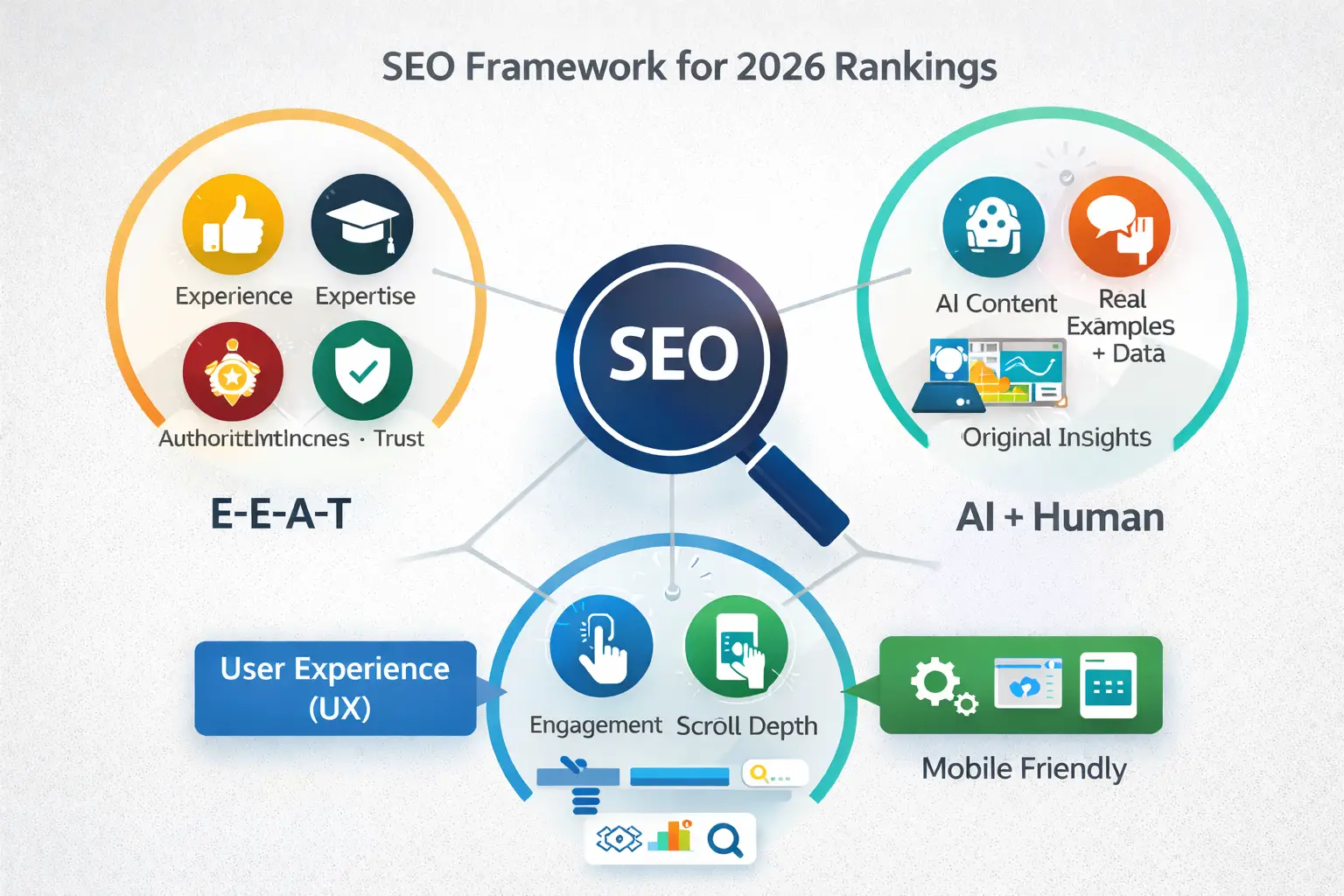
This allows you to effectively transfer your subject proficiency into the AI's outputs. You can also leverage AI to improve your modifying process. Tools can be trained on your company's design guide and configured to check for grammar, tone consistency, SEO best practices, and more. AI does not simply help in preparing and modifying; it likewise significantly lowers preparation time and aids in total organization content development.
AI tools can reveal suggested keywords and optimization techniques to ensure your content ranks high in search results page. Review existing content to guarantee consistency and readability across channels, maintaining your brand's identity. AI can explore beneficial audience insights and material marketing performance, offering valuable methods, subject ideas, and SEO chances that might have been neglected by human authors.

Latest Posts
Steps to Creating Sustainable Search Success
Creating Smart AI Content Frameworks for Higher ROI
Your Complete Guide to 2026 AI Content Strategy